That shiny mylar blanket crammed into the corner of your survival kit is one of the most versatile tools you can carry. It weighs about 2 ounces, folds to the size of a deck of cards, and costs a couple of dollars. Most people know it reflects body heat. Far fewer realize it can serve as a shelter, signal device, water collector, fire aid, and a dozen other things that could make the difference in a real survival situation.
Improvised Shelter
String a cord between two trees, drape the blanket over it, and weight the edges down. You have an A-frame shelter in under 5 minutes. The reflective surface facing inward bounces body heat back toward you, and the waterproof material sheds rain effectively.
For a lean-to, tie one edge to a horizontal support and angle it down to the ground. Pair this with a small fire in front, and the blanket reflects that heat back onto you from behind. Remarkably effective for its simplicity.
Ground Insulation
Cold ground steals body heat faster than cold air. A survival blanket on the ground creates a vapor barrier that reduces conductive heat loss. Place it shiny side up so it reflects body heat back toward you. Add pine needles or leaves on top for cushioning.
Signal Device
The reflective surface is visible from an extraordinary distance in daylight. Spread it flat in an open area or hang it vertically where it catches wind and sunlight. The movement and reflections draw attention far better than waving your arms. At night, position the blanket behind a fire to reflect firelight outward and upward, amplifying its visible glow significantly.
Water Collection
Shape the blanket into a funnel by tying corners to sticks at different heights, creating a slope that channels rainwater to a low point. Place a container at the collection point. Even light rainfall collects a surprising amount over a few hours.
For dew collection, spread it flat on grass in the evening. By morning, dew condenses on the surface and can be funneled into a container.
Solar Still
Dig a hole, place a container in the center, surround it with green vegetation, and stretch the blanket over the hole with a small weight above the container. Moisture evaporates, condenses on the underside, and drips into your container as clean water. Slow but potentially life-saving in desert conditions.
Fire Reflector
Position the blanket behind your fire, stretched between two sticks. The reflective surface bounces heat back toward your shelter or sleeping area, effectively doubling the useful heat output. Keep the blanket at least two to three feet from flames. Mylar melts and burns.
Windbreak
Wind chill can make a 40-degree day feel like it is below freezing. A survival blanket strung up as a windbreak blocks moving air and creates a calmer, warmer microclimate. Simpler than building a full shelter and set up in minutes.
Fishing Aid
Cut small strips and attach them to a hook as an improvised fishing lure. The reflective surface mimics the flash of small baitfish in water. A survival technique that has produced results in real situations.
Food Protection
Wrap food in a survival blanket to keep it cool. The reflective surface blocks radiant heat from the sun and creates a vapor barrier that slows temperature exchange. Useful when you do not have a cooler.
Trail Marking
Tear small strips and tie them to branches along your path. The reflective material catches light and is visible from a distance. Great for marking a route to water, outlining your camp, or creating a visible trail for rescue teams.
Body Wrap for Hypothermia
The original intended use, but worth doing correctly. Wrap the blanket around the person with the shiny side facing inward. Tuck it snugly and cover as much skin as possible. The material reflects up to 90% of radiated body heat. For severe hypothermia, add any other insulation on top: jackets, sleeping bags, pine boughs.
Emergency Stretcher
Heavier duty survival blankets with a reinforced fabric layer can serve as a makeshift stretcher or drag litter. Fold double for strength, place the injured person on it, and use edges as handles.
Cooking Surface
A folded survival blanket on a flat rock creates a clean surface for food prep. Easy to wipe down and keeps food off dirty surfaces.
Choosing the Right One
- Standard mylar blankets for lightweight backup. Carry several because they are disposable.
- Heavy-duty versions with reinforced grommets for shelter building. Heavier but reusable.
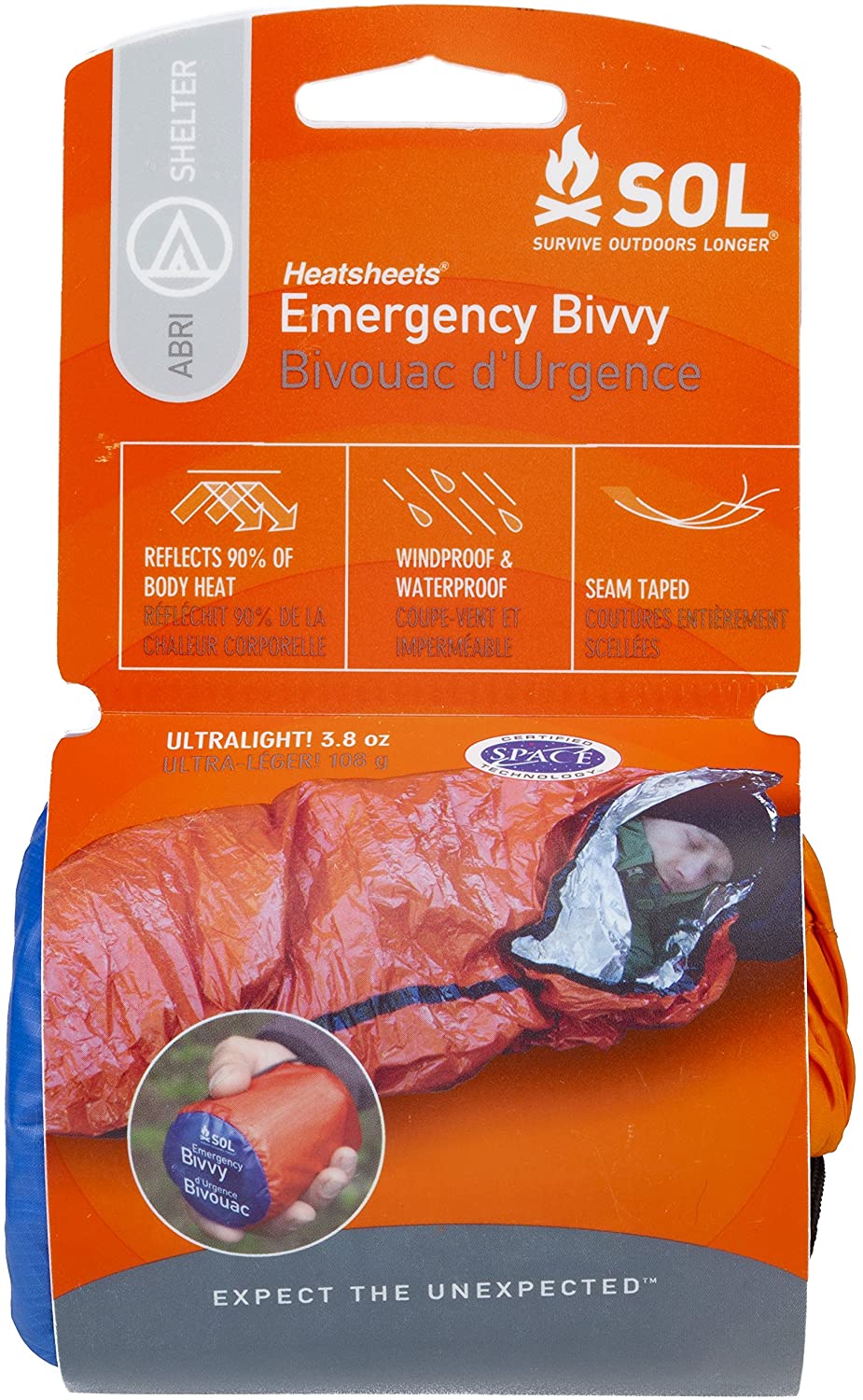
- SOL Emergency Bivvy, shaped like a sleeping bag with sealed seams. Better for body heat retention than a flat blanket.
Carry at least two or three standard blankets in every pack. They weigh nothing, cost almost nothing, and the number of ways they can help you is genuinely impressive. Think of them as the duct tape of survival equipment. Never the perfect tool for any single job, but a good-enough tool for dozens of jobs.