Everyone overloads their first bug out bag. You read every forum thread, watch every YouTube video, and end up with a 60-pound pack that you cannot carry for more than a mile. Then real-world experience teaches you that mobility matters more than having a tool for every hypothetical scenario.
A good bug out bag covers 72 hours of self-sufficiency at a weight you can actually move with. For most adults, that means keeping the total pack weight under 25 to 30 pounds.
Here is what earns its space and what gets left behind.
The Bag Itself
Skip the tacticool MOLLE packs covered in pouches and straps. They scream "I have supplies" to everyone around you, and they are often poorly designed for actual comfortable carrying. A good hiking backpack in a neutral color (grey, green, dark blue) with 35 to 45 liters of capacity is the right call.
- Osprey Talon 44: About $160, weighs 2.5 lbs, excellent hip belt and ventilated back panel.
Carries weight efficiently.
- Mystery Ranch Scree 32: Around $140, bombproof construction, top and side access. A bit heavier at 3.2 lbs but incredibly durable.
- Budget option: The Kelty Redwing 44 ($120) has been a reliable mid-range pack for years.
Whatever you pick, load it up and walk five miles before committing. An uncomfortable pack at mile one becomes unbearable at mile ten.
What to Pack: The Essentials
Water (4 lbs): Two 1-liter Nalgene bottles (filled) plus a Sawyer Squeeze filter ($30, 3 oz).
That gives you immediate hydration and the ability to refill from any freshwater source. Water purification tablets as backup weigh almost nothing.
Food (3 lbs): Calorie-dense, no-cook options. Clif bars, peanut butter packets, instant oatmeal, trail mix, beef jerky. Aim for 2,000 calories per day for three days. Skip the freeze-dried meals unless you are sure you will have the ability and time to boil water.
Shelter (2 lbs): A compact tarp (8x10 or 10x10 silnylon, about $40 to $70) and 50 feet of paracord weighs under 2 lbs and gives you rain protection and ground cover. Add a lightweight bivy sack ($30 to $60, about 10 oz) if you want enclosed sleeping.
Warmth (2 lbs): A compact sleeping bag or insulated quilt rated to the lowest temperature you might encounter.
The Kelty Cosmic 20 ($100, 2.5 lbs) is a solid budget choice. Add a mylar emergency blanket as backup (2 oz).
Fire (0.5 lbs): Two Bic lighters (they just work), a ferro rod with striker, and a small bag of petroleum jelly cotton balls for tinder. Waterproof matches as a third backup. Redundancy matters here because fire is critical for warmth, water purification, and signaling.
First aid (1 lb): A compact trauma kit with gauze, tourniquet, compression bandage, medical tape, antiseptic wipes, ibuprofen, anti-diarrheal medication, and any personal prescriptions.
Adventure Medical Kits makes a solid Ultralight kit for about $25 that covers the basics.
Navigation (0.5 lbs): A paper map of your area and a basic compass. Your phone might be dead or without signal. A Silva Starter compass costs $12 and does the job.
Light (0.5 lbs): A headlamp with extra batteries. The Petzl Actik Core ($55, 2.6 oz) is rechargeable and runs on AAAs as backup.
A small backup flashlight is worth the extra 3 oz.
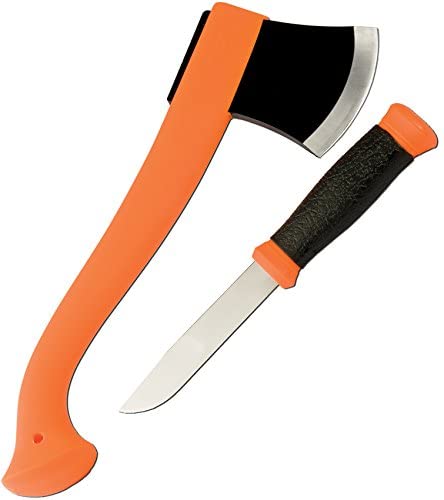
Tools (1 lb): A fixed-blade knife (Mora Companion, $15, 4 oz blade) and a small multitool (Leatherman Skeletool, $65, 5 oz). That covers cutting, prying, screwdriving, and light wood processing.
What to Skip
These items show up in nearly every bug out bag list online, and most of them are wasted weight:
- Hatchets and large knives: A Bowie knife looks impressive but a 4-inch Mora does 95% of the same tasks at a fraction of the weight.
You are bugging out, not building a log cabin.
- Full cooking kits: Pots, pans, stoves, and fuel canisters add 3 or more lbs for the ability to cook hot meals that you can replace with no-cook alternatives.
- Multiple changes of clothes: One extra pair of socks and underwear, plus a rain layer. That is it. Clothes are heavy and bulky.
- Books and field guides: Download them to your phone.
Physical books weigh a surprising amount.
- Firearms and ammunition: This is a personal choice, but weight-wise, a loaded handgun with spare magazine adds 2 to 3 lbs. If you carry one, it means something else gets cut.
- Solar panels and battery banks: A 10,000 mAh battery bank ($20, 6 oz) is enough for 72 hours. Solar panels are slow, heavy, and only work in direct sunlight.
How to Organize It
Use color-coded dry bags or packing cubes to group items by category.
When you need something at 2 AM in the rain, you should be able to find it by feel.
- Red bag: first aid
- Blue bag: water and purification
- Green bag: food
- Yellow bag: fire kit
- Items you need quick access to (knife, headlamp, lighter) go in hip belt pockets or the top lid.
Pack it, weigh it, and walk with it. Then take out everything you did not use or touch during a practice run. The lightest bug out bag that still covers your needs is always the best one.