Fish are one of the most accessible protein sources in a wilderness survival situation. Rivers, lakes, and streams hold food that requires far less energy to catch than chasing down game on foot. The challenge is that most people picture fishing as something that requires a rod, reel, hooks, and line. In a real survival scenario, you probably have none of those things.
The good news is that humans have been catching fish for thousands of years without any of that gear.
The techniques are simple, the materials are all around you, and with some patience and observation, you can put food on a fire using nothing but what nature provides.
Read the Water First
Before you try any fishing method, spend time watching the water. Fish are predictable creatures that gather in specific spots based on water temperature, oxygen levels, current speed, and food availability.
In rivers and streams, look for pools below rapids and waterfalls.
Fish rest in slower water after being pushed through faster sections. Undercut banks, fallen logs, and large rocks create eddies where fish hold and wait for food to drift by. Shallow runs between pools are highways that fish use to move up and downstream.
In lakes and ponds, fish concentrate near structure. Fallen trees, weed beds, rocky points, and inlet streams all hold fish. Early morning and late evening are the most active feeding times.
During the middle of a hot day, fish move to deeper, cooler water and are harder to reach without gear.
The point is to not waste energy fishing in empty water. Observation comes free and tells you exactly where to focus your efforts.
Hand Fishing
Hand fishing is exactly what it sounds like. You reach into underwater holes, crevices, and undercuts and grab fish with your bare hands.
This works best for catfish and other species that hide in enclosed spaces. The fish backs into a hole, you block the exit with your body, and you work your hand in to grab it by the lower jaw or gill plate.
This is physically demanding and carries some risk. You might grab a snapping turtle instead of a catfish. Submerged logs can have sharp edges. And holding your arm underwater in a tight space while a thrashing fish tries to escape is not comfortable.
But it works, and it requires zero tools. In warm, shallow water with visible structure, hand fishing can produce food faster than most other improvised methods.
It is most effective in muddy rivers with catfish populations, but you can also corner fish in shallow streams by herding them into tight spots against the bank.
Improvised Hooks and Line
If you can make a hook and find something to use as line, your odds improve dramatically. Hooks can be carved from hardwood, bone, thorns, or safety pins. The gorge hook is the simplest survival design.
Take a small piece of hard wood or bone about an inch long. Sharpen both ends to points. Tie your line to the middle. When a fish swallows the bait, the gorge turns sideways in its throat and locks in place.
For a more traditional J-hook shape, carve one from a piece of hardwood with a knife or sharp stone. It does not need to be pretty. It just needs a point sharp enough to penetrate a fish's mouth and a barb or rough surface to keep the fish from slipping off.
Thorns from hawthorn, acacia, or honey locust trees make surprisingly effective hooks.
They are already sharp and curved. Lash two together at a slight angle for a stronger design with a wider gap.
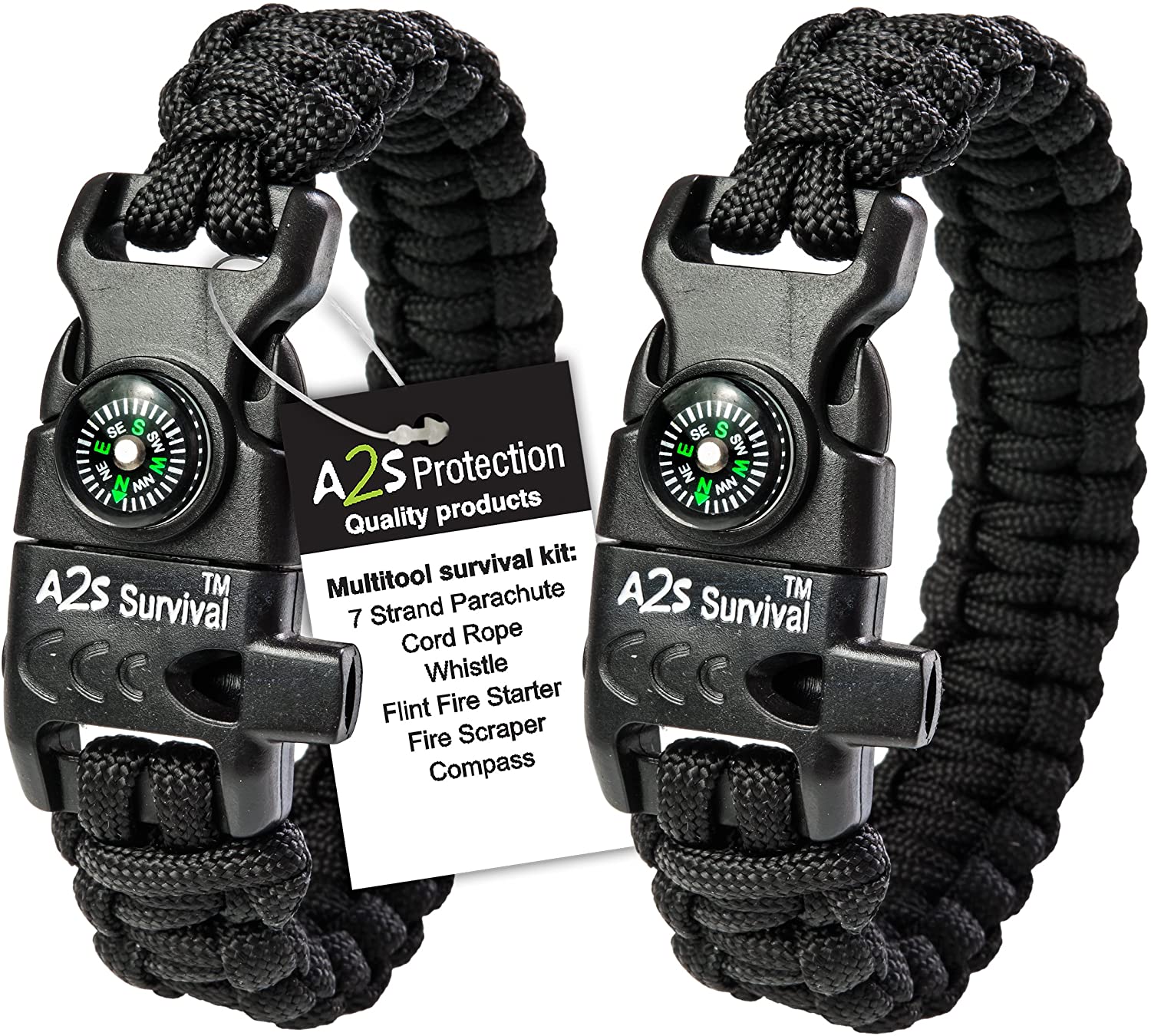
For line, the inner strands of paracord work well. Each strand is thin enough to avoid spooking fish but strong enough to land anything up to a few pounds. Plant fibers twisted into cordage also work. Dogbane, milkweed, and stinging nettle all produce fibers that can be twisted into usable line with some effort.
In a true emergency, even shoelaces or threads pulled from clothing can serve as fishing line.
Fish Traps
Traps are the most efficient survival fishing method because they work while you do other things. Build a trap, set it, and check it later while you gather firewood or build shelter.
The funnel trap is the most common design. Build a walled enclosure from stacked rocks in a stream, leaving a narrow opening that faces upstream. Fish swim in through the narrow entrance following the current but cannot find their way back out through the small gap. The wider the enclosure and the narrower the opening, the more effective the trap.
A basket trap works on the same principle using woven branches.
Build a cone-shaped basket from flexible green branches, with a funnel entrance that fish can push through but not back out of. Bait the inside with crushed insects, fish guts, or bread if you have it. Place the trap in a stream with the opening facing upstream or in still water near shore where fish travel.
Tidal pools and receding water levels create natural traps. After a river floods, side pools often trap fish as the water recedes.
Check these pools for easy catches.
Spearing
Spearing fish requires skill and patience but works well in shallow, clear water. Cut a straight sapling about 6 to 8 feet long and sharpen one end to a point. For better results, split the sharpened end into two or four prongs and wedge them apart with small sticks, creating a multi-pointed gig that covers more area.
Harden the tips by holding them over a fire until the wood darkens slightly.
This drives out moisture and makes the points more rigid and durable.
The tricky part is aiming. Light refracts when it passes from air into water, which makes fish appear to be in a slightly different position than they actually are. Always aim below where you see the fish. The deeper the water, the more offset you need. In ankle-deep water, aim just slightly below the visible position. In knee-deep water, aim noticeably lower.
Stand still in or beside the water and wait for fish to come to you.
Chasing fish with a spear almost never works. Patience is the skill that makes spearing productive.
Damming and Corralling
In small streams, you can build a simple dam from rocks and mud to concentrate fish into a small area. Narrow the stream gradually over several hours, giving fish time to move through rather than fleeing. Once you have reduced the flow to a shallow, narrow channel, fish become easy to catch by hand, spear, or basket.
Another approach is to build two rock walls in a V shape pointing downstream. Fish moving with the current get funneled into the narrow end where they pile up and can be grabbed or scooped out. This method has been used by indigenous peoples across every continent and remains one of the most effective ways to harvest fish from moving water.
Bait and Attractants
Whatever method you use, bait improves your odds. Turn over rocks in the stream and collect insects, larvae, crayfish, and worms. Grubs found in rotting logs are excellent bait that fish rarely refuse. Grasshoppers, crickets, and ants work well for surface-feeding fish.
If you catch one fish, use its guts and eyes as bait for the next. Fish are often cannibalistic and will readily eat pieces of their own kind. Crush some of the entrails and scatter them upstream of your trap to create a scent trail that draws fish in.
Cooking Your Catch
Always cook fish thoroughly in a survival situation. Raw freshwater fish can carry parasites that will make a bad situation worse. The simplest method is to gut the fish, skewer it on a green stick, and prop it beside a fire. A flat rock heated in the fire also works as an improvised cooking surface.
Small fish can be cooked whole without gutting. Larger fish should be cleaned and filleted if possible to ensure even cooking. When the flesh is opaque and flakes apart easily, it is done.
Final Thoughts
Survival fishing is about patience, observation, and making the most of what you have. You do not need a tackle box full of lures. You need to understand where fish live, how they behave, and how to exploit that behavior with simple tools and techniques. Practice these methods on your next camping trip when the stakes are low. That way, if you ever need to rely on them for real, the skills will already be there.